
Yamaha on the bench
I was recently servicing a Yamaha KX-800 tape deck and had the chance to try out some improvements to its audio path. KX-800 is a straightforward 3-head cassette deck featuring an open-loop single-capstan transport mechanism manufactured by Sankyo. The deck is equipped with Canon GF-38 low-inductance amorphous record/playback heads, specifically developed for Yamaha.
The KX-800 includes ORBiT (Optimum Record Bias Tuning), a microprocessor-controlled bias optimization system. The bias calibration procedure utilizes the deck’s internal oscillator to generate test signals at -20dB level, adjusting bias current until the 400Hz and 10kHz signal levels match within 1dB or somewhere about. Performance characteristics indicate the deck functions more effectively as a recorder than as a playback source, presenting frequency response roll-off above 15kHz during sweep signal measurements.
However, a significant limitation affects audio purity: like many decks from this era, the KX-800 employs 4066-series CMOS analog switches in the signal path, which introduce measurable nonlinearity. But here is the solution: replacing the 4066 switch with a micro relay module.
Replacing the 4066 switch
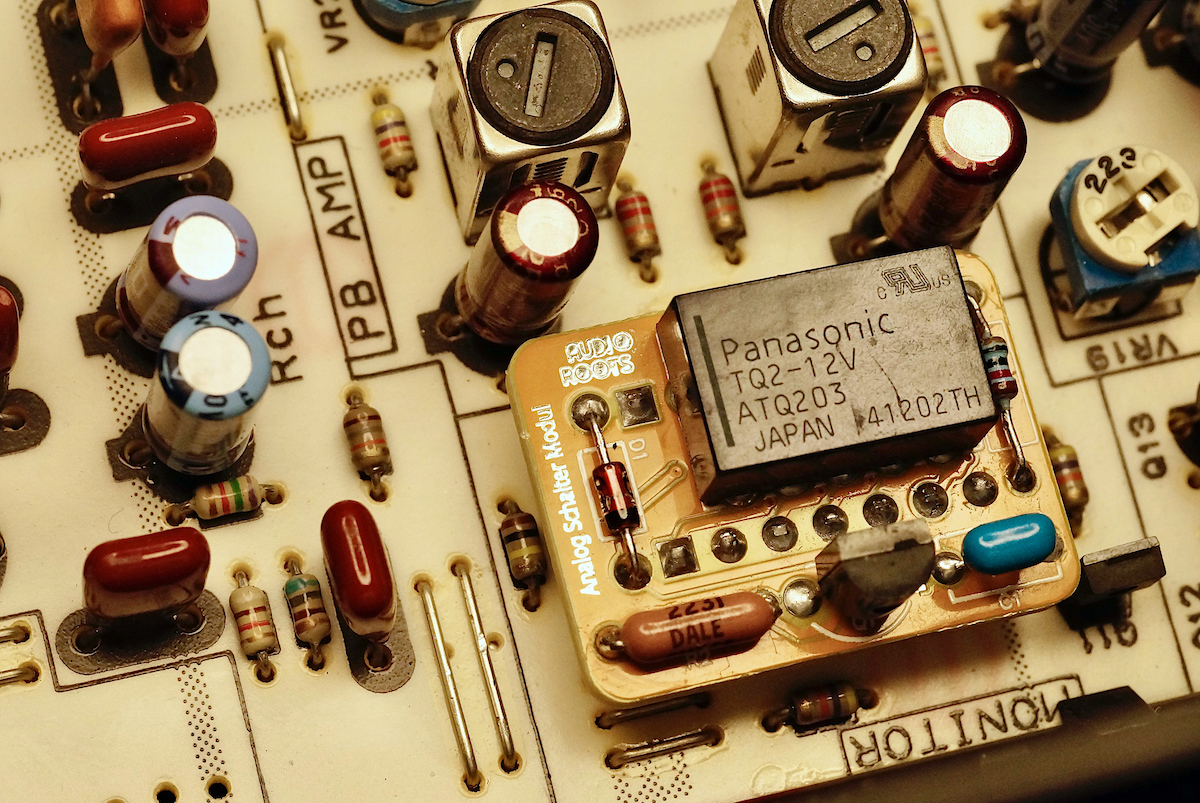
The Tape/Monitor selection function is implemented using a single 4066 bilateral switch IC. The proposed analog-relay module provides a drop-in replacement for the 4066 without requiring any changes to the existing circuit. In the de-energized condition, the audio path is connected through the relay’s normally closed contacts. Contact switching uses the existing supply and control voltages originally designed for the 4066 IC.
After replacing the 4066 switch in the Yamaha KX-800 with a fully analog relay module, I observed a notable reduction in both total harmonic distortion and, more importantly, intermodulation distortion.
Comparative Measurement Results
The presented data illustrates the linearity enhancement of this straightforward, but well-engineered tape deck.
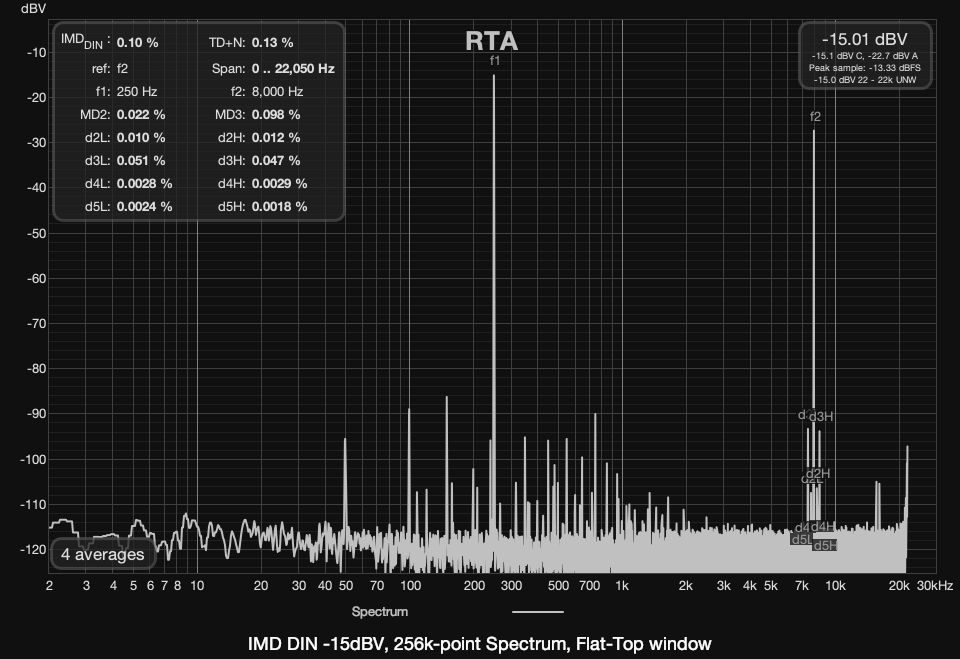
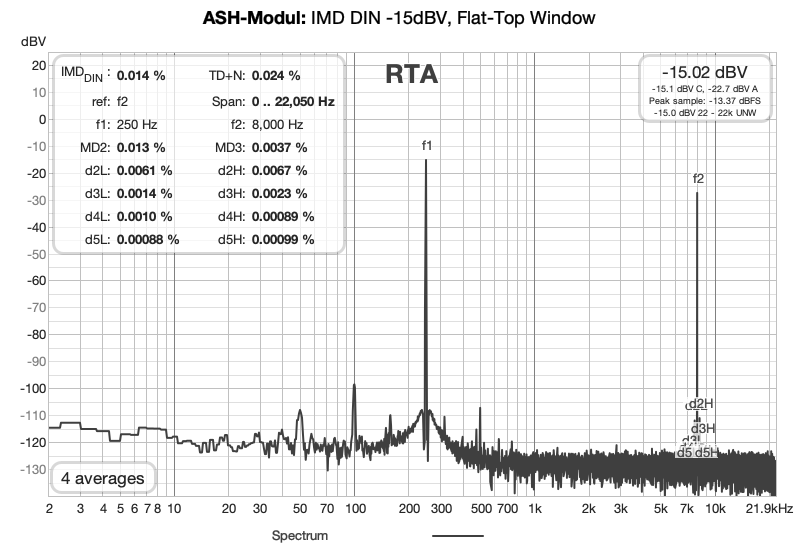
At a level of -15 dBV, the IMD coefficient decreased by a factor of 6.
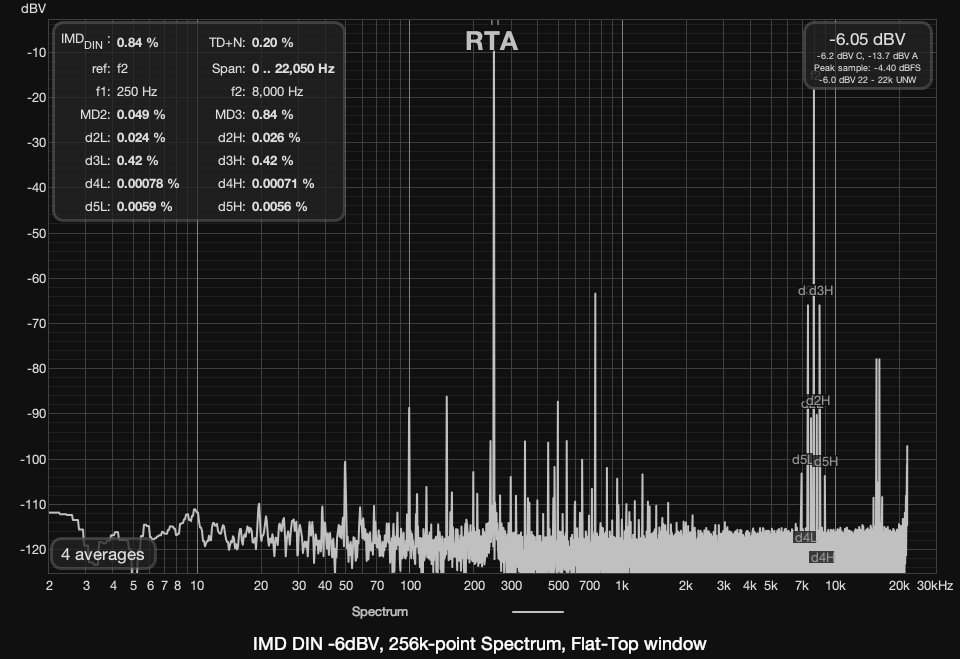
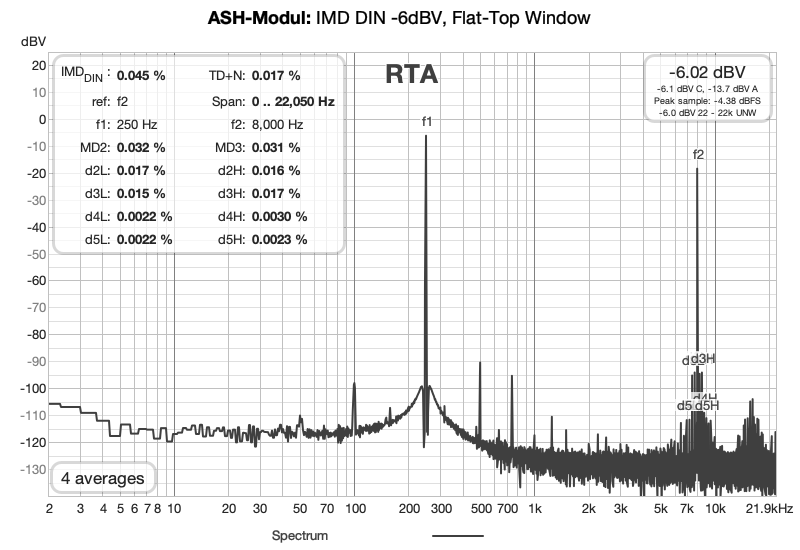
At a level of -6 dBV - even more dramatic - a 20-fold reduction.
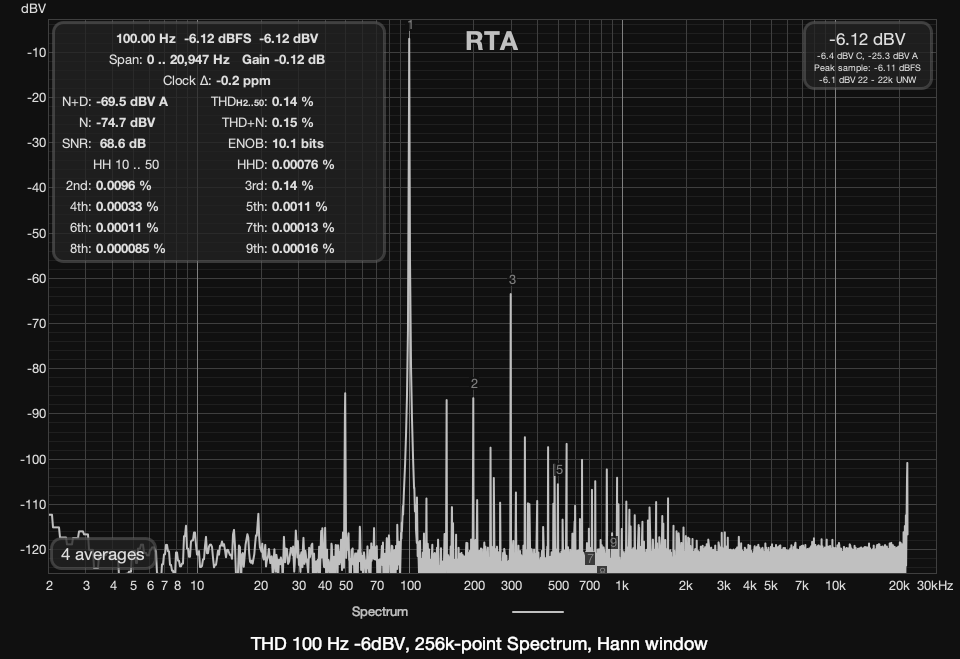
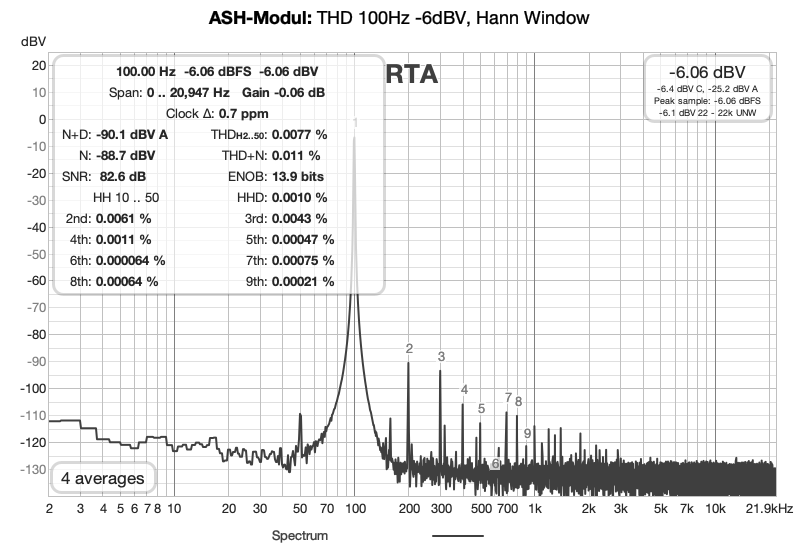
THD measurements at -6 dBV and 100 Hz showed a 12-fold decrease.
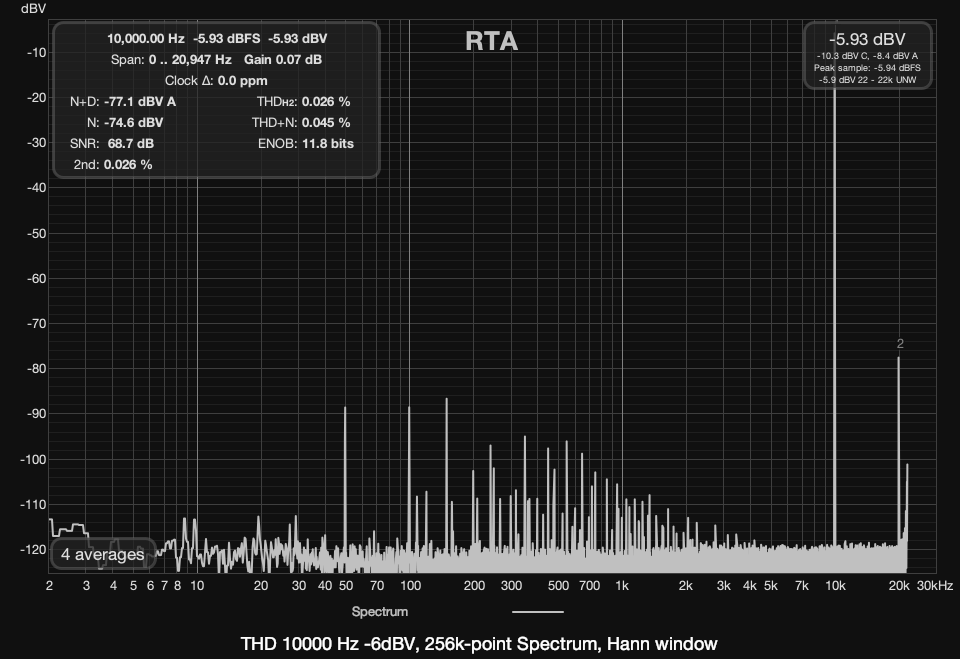
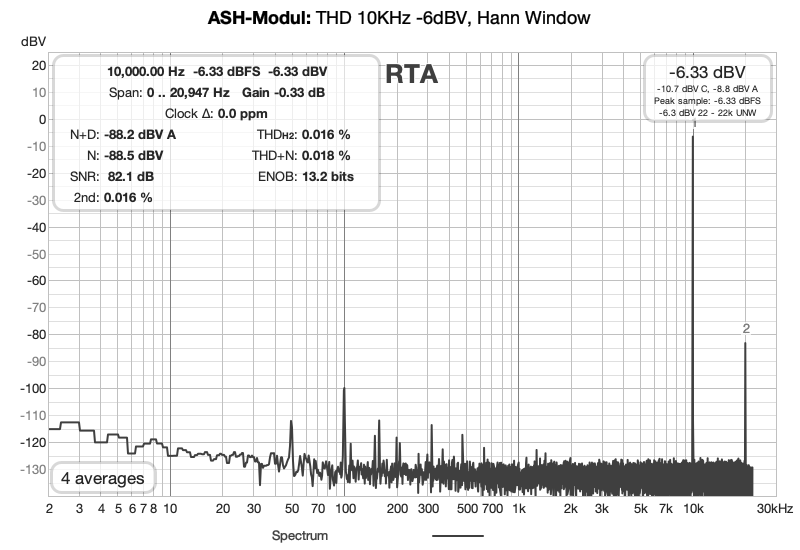
The difference at 10 kHz is less pronounced, THD was still reduced by at least a factor of 2.
Conclusion
These results demonstrate the significant nonlinearity of the 4066 IC`s - not only its amplitude dependence but also its frequency-related distortion behavior. In contrast, the relay module is essentially free from these limitations. Overall, I’m very satisfied with the results of the upgrade performed on the KX-800.
